• Curatorial

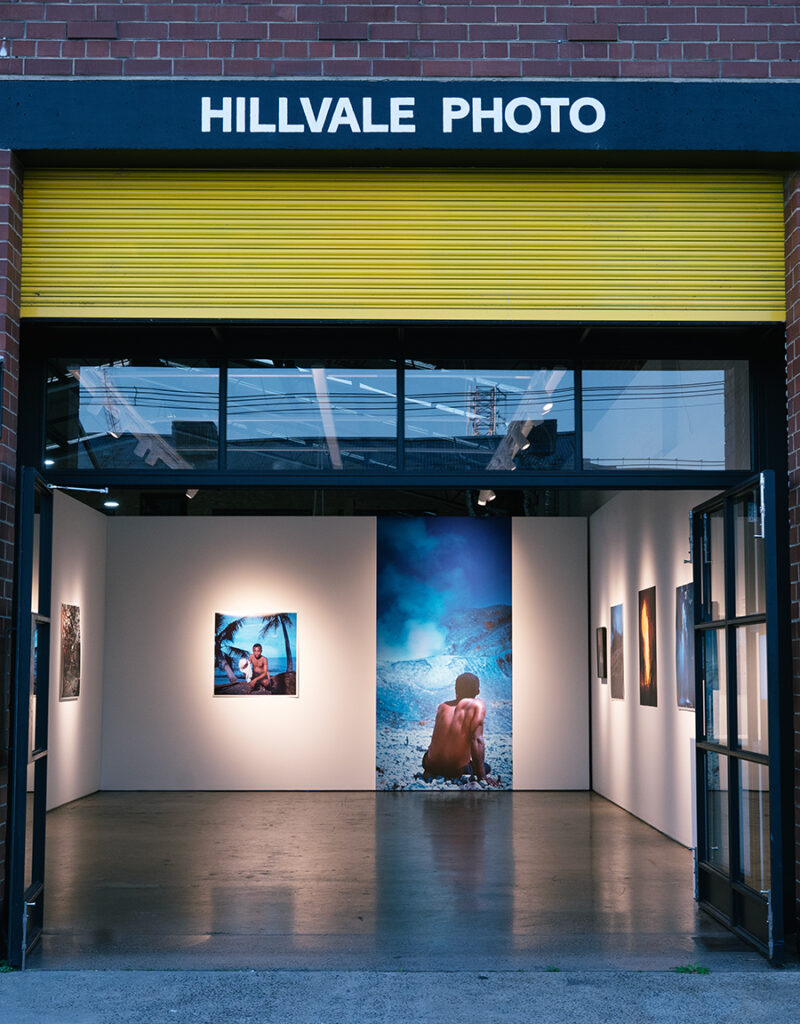
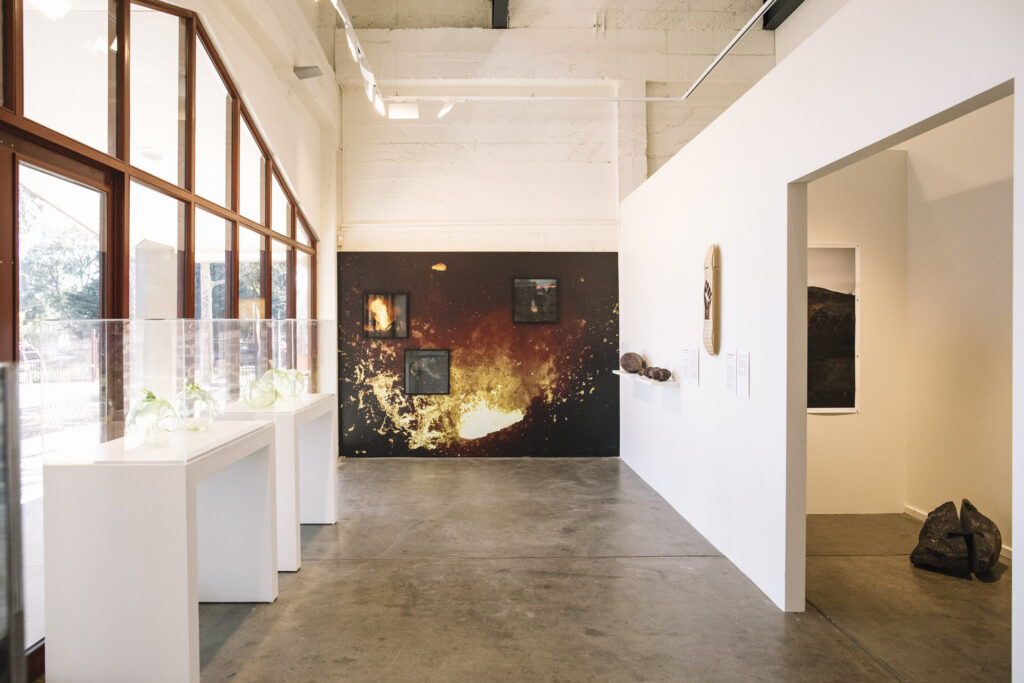
The Mark of a Terrible Sun Installation Views

The Mark of a Terrible Sun

Recent Installation Views from Melbourne (AU)

Incinerator Gallery: January-March 2026 Group Exhibition

Hillvale Gallery: April-May 2025 Solo Exhibition

Text by Jonas Cuénin, Photographer and Director of Blind Magazine, France


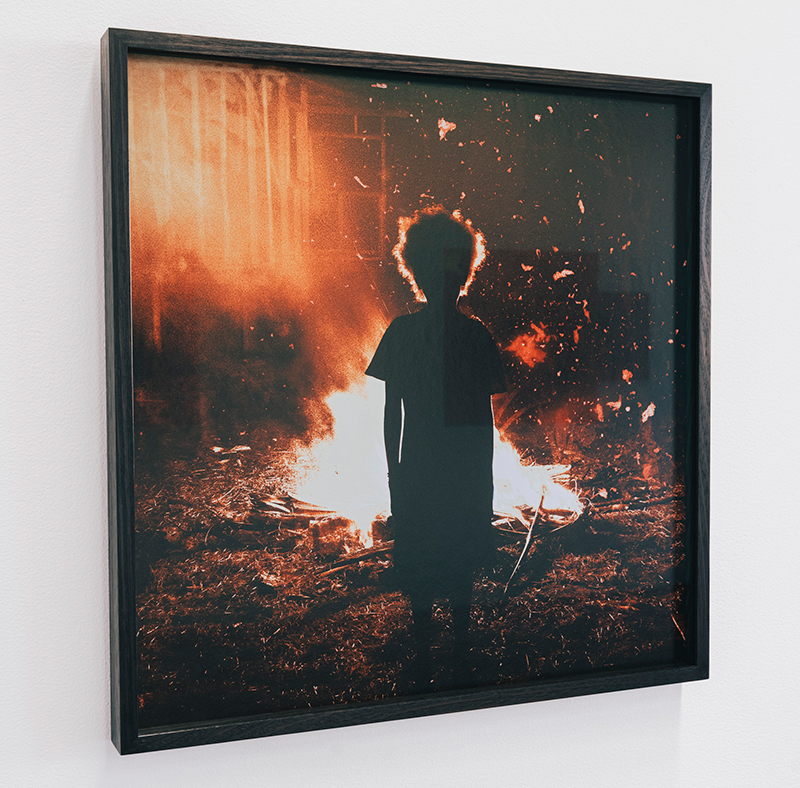
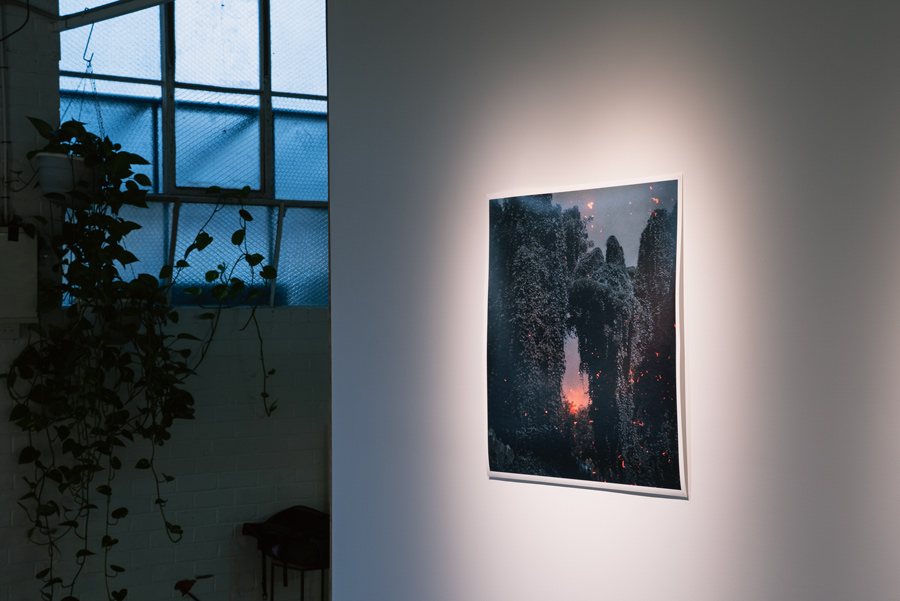
At first, there is fire. Not as an explosion, not as a spectacle, but as a presence that lingers. A column of incandescent particles rises from the ground, illuminating the night like a wound that refuses to close. Two figures run, their bodies caught between fear and familiarity. Elsewhere, children stand still, watching the earth burn as if it were part of the landscape, something known, inherited, almost ordinary. In The Mark of a Terrible Sun, Ioanna does not photograph catastrophe as an event. She photographs what remains once catastrophe has already passed through lives, bodies and memory.
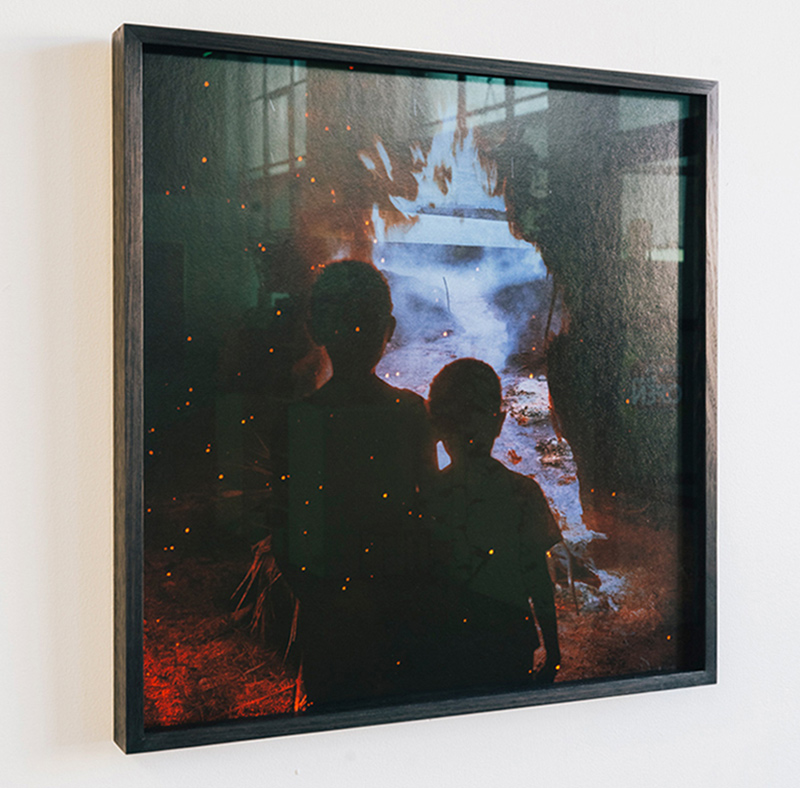
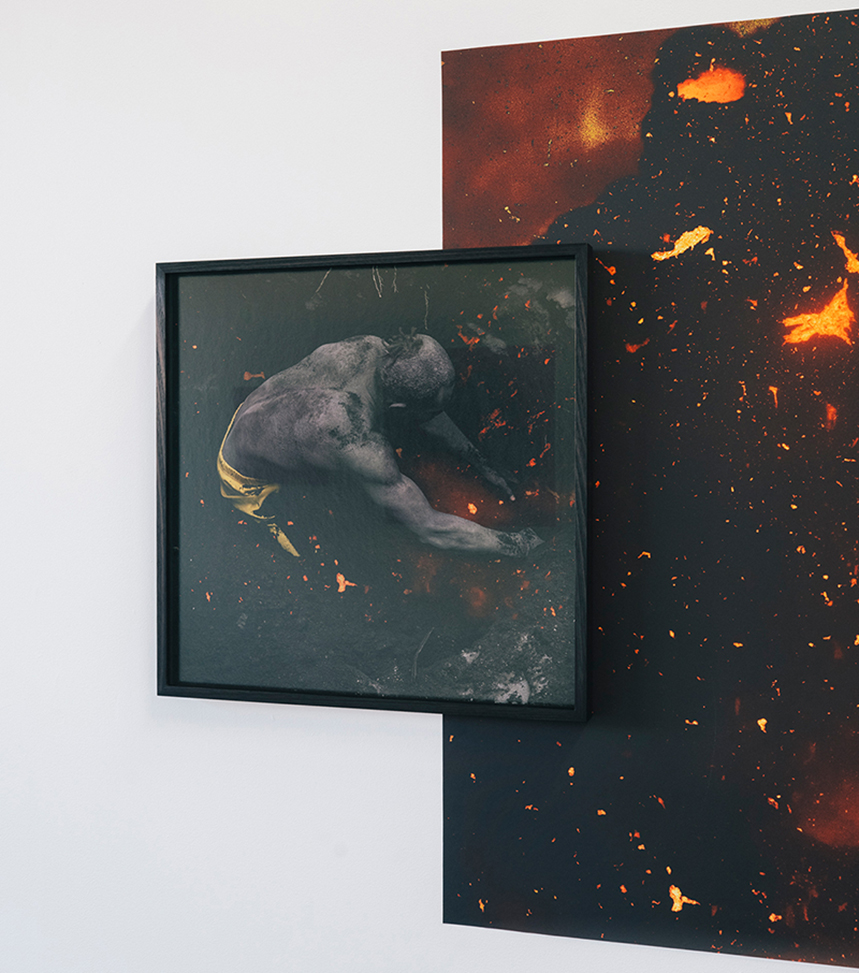
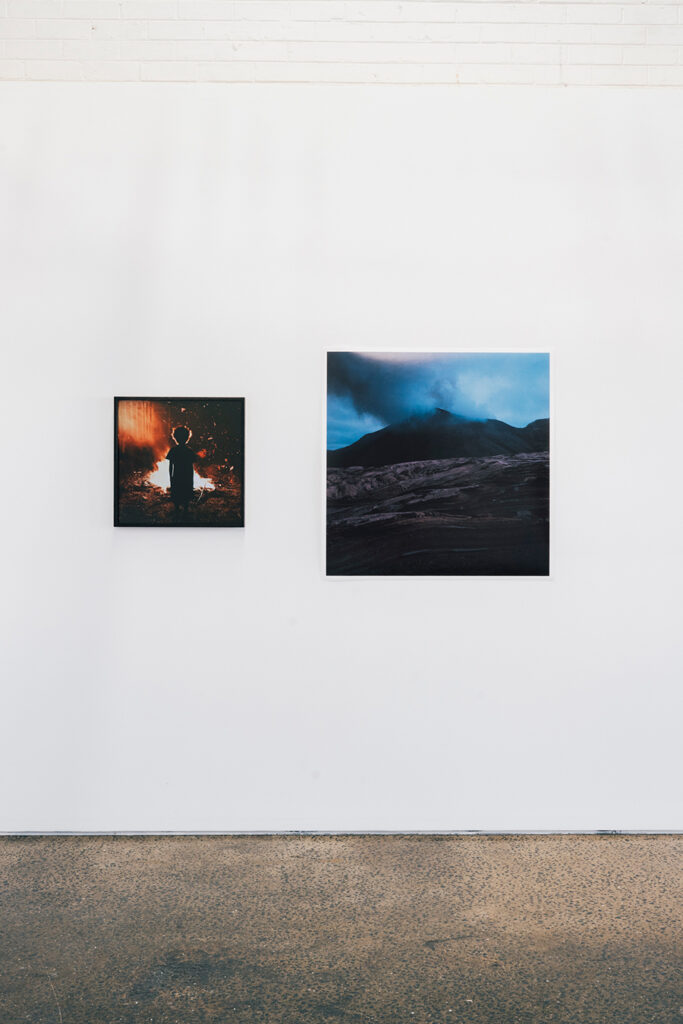
The project unfolds across volcanic regions, where eruptions are part of collective memory and daily uncertainty. Sakellaraki’s images move between people and landscapes, moments of waiting and moments of the aftermath. Children stand at a distance from glowing lava fountains. Adults cross scotched ground. Faces remain calm, sometimes resigned, sometimes unreadable. Nothing here is spectacular in the traditional sense. The danger present, but contains, as if absorbed into the rhythm of life.

Sakellaraki did not arrive as a witness chasing catastrophe. Her approach is slower, built on observation and proximity. “I was interested in how people live with the constant possibility of destruction,” she explains. “How memory, fear, and resilience coexist in places shaped by volcanic activity.” The photographs are not about the eruption itself, but about what remains before and after — the psychological imprint left behind.

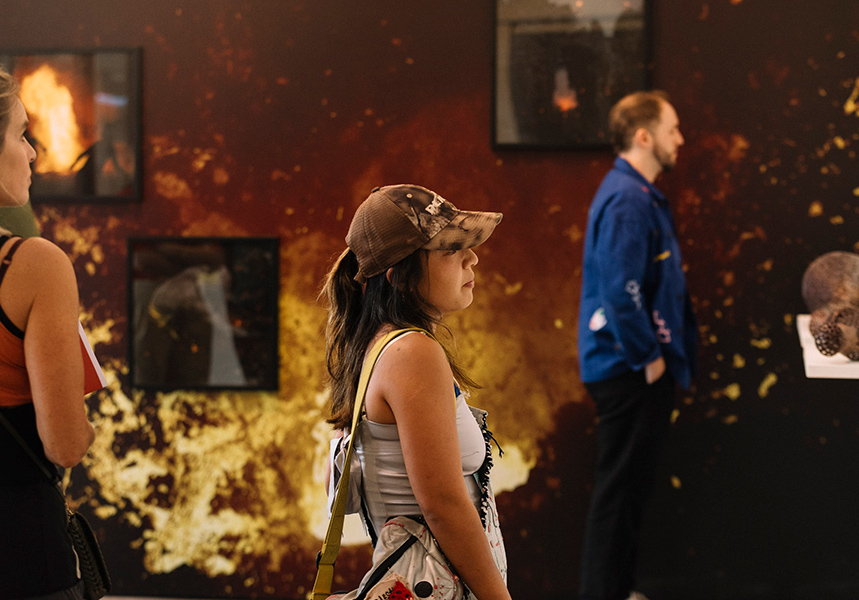
She chose analogue medium format photography deliberately. Working with film allowed her to slow down, to accept uncertainty, and to treat the image as a physical object rather than a fixed document. Sakellaraki photographs on film, then alters the images afterwards by layering traces of magma captured during volcanic eruptions onto the photographs. The growing particles are not decorative effects but residues, reintroduced into the image as marks. They settle across bodies and landscapes, remaining visible long after the event itself, much like the memory of disaster.

Throughout the series, the relationship between humans and nature is never framed as heroic or tragic. Instead, it is quiet and unresolved. People are shown adapting rather than resisting. Children watch eruptions from afar, not in panic but in silence. Adults move cautiously across altered terrain. The volcano is neither enemy nor spectacle. It is simply there.

Sakellaraki’s color palette reinforces this tension. Deep red, blacks and glowing yellows dominate the images, contrasting with moments of blue light or swallowed vegetations. Fire and darkness coexist. The landscapes feel unstable, yet strangely familiar. These are not distance, exotic locations; they are inhabited spaces.

These pictures also question the limits of photography itself. Can an image contain an experience that is ongoing, unresolved and cyclical? Sakellaraki does not attempt to answer this directly. Instead, she allows the process to speak. By altering the photographs, she acknowledges that the image alone is insufficient; that something else must be added to convey the weight of what happened.

“The photograph becomes a site of memory,” she writes. It is not a record of a single moment but a layered surface where time collapses. Past eruptions bleed into present images. Fear and routine overlap. The Mark of a Terrible Sun is neither documentary nor purely conceptual. It occupies a fragile space between testimony and transformation.

The fire fades. The ground cools. Life continues. But the mark remains.